September 2025 Club Newsletter
Upcoming August Meeting
By Louis Vandenberg
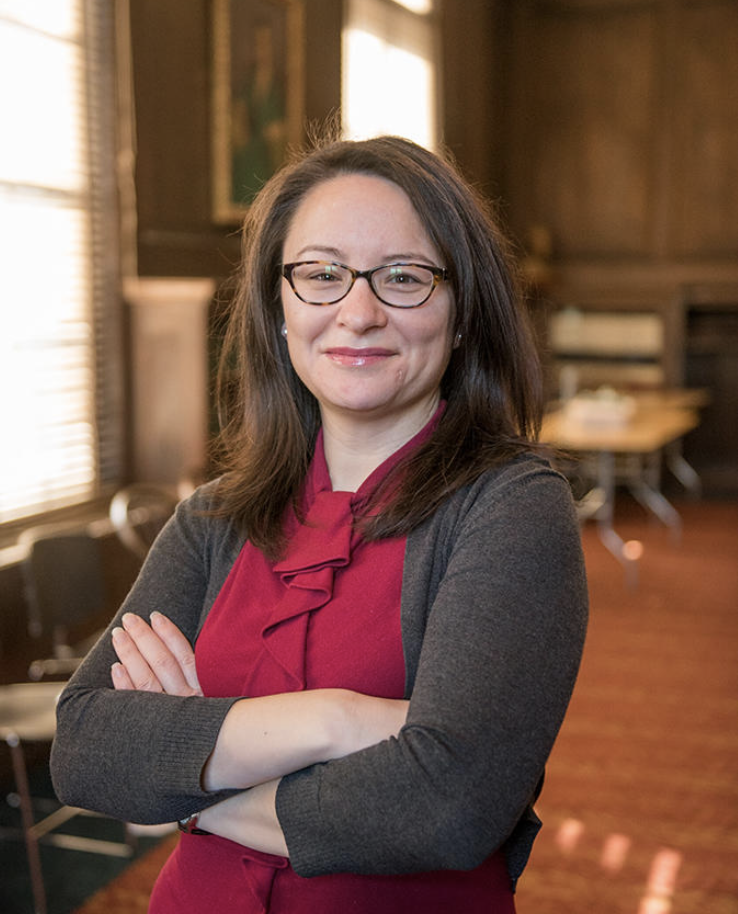
Join us for our hybrid (In-person and Zoom), club meeting which will be held at the Peninsula Center Library, 701 Silver Spur Road, Rolling Hills Estates, California, 90274 on Sunday, September 21, 2025, at 2:30 PM. Our featured speaker will be Dr. Kim Yi Dionne who will attend via Zoom.
Dr. Kim Yi Dionne is a renowned American political scientist specializing in U.S. and international politics and public opinion. She earned her B.A. in Political Science and International Relations (1999), M.A. (2007), and Ph.D. (2010) in Political Science from UCLA, where she was a FLAS Fellow. From 1999 to 2003, she served as Associate Director of M.B.A. Admissions for the UCLA Anderson School of Management. A Fulbright Scholar, she is now a tenured Associate Professor of Political Science at the University of California, Riverside.
Dionne also served as Senior Editor of The Monkey Cage, the Washington Post’s political science blog. In this role, she wrote and edited articles for the Post while mentoring other political scientists on how to “translate” their academic research for a broader audience. In 2020, she and her co-authors received the Western Political Science Association’s award for Best Article of the Year.
She is a member of the advisory board for Women Also Know Stuff (WAKS), a database highlighting women in political science and their areas of expertise. For her work with WAKS, Dionne shared the 2016 Jane Mansbridge Award from the National Women’s Caucus for Political Science, honoring efforts to advance accountability, gender equality, and inclusion in the field.
At the September 21st meeting of the Palos Verdes Democrats, Dr. Dionne will speak on: “Resilience in the Face of Threat: Lessons from Other Democracies for Navigating the Trump Regime.” Her presentation will draw upon recent developments (Malawi/Africa) and historic examples (Poland), which show how people uphold democracy under serious political and economic adversity, the consequences of undermining support for democracy and global health (defunding USAID), and how Americans can take action to strengthen and defend democratic institutions at home and abroad. This promises to be a lively discussion with one of the most powerful and outspoken voices in American political science: the brilliant, award-winning scholar and journalist Kim Yi Dionne.State Senate Candidates
State Senate Candidates
At the September meeting we also have confirmed to speak in person at least seven of the ten candidates that are still in the race for the 24th District Senate race. This is the first time in twelve years that we have had an open seat in our senate district and the following candidates have confirmed to speak in person at our meeting: Eric Alegria, Amaris Dordar, John Erickson, Ellen Evans, Brittany McKinley, Mike Newhouse and Sion Roy. Please take this unique opportunity to meet and hear from the candidates.
PV Democrats Board Votes to Endorse Proposition 50
By Reggie Jue
The Board of Directors for the Palos Verdes Democrats joins with the California Democratic Party in endorsing Proposition 50. This measure will temporarily replace the independent California Citizen’s Redistricting Commission congressional district definitions with one approved by the State Legislature. This will counter an act by the Texas legislature to improperly gerrymander the Texas congressional districts and skew the 2026 elections in the hopes of holding the razor-thin GOP majority in the House of Representatives.
“Two wrongs do not make a right.” None of us believes that the two largest states in the union distorting their elections is right. Making it right is not the goal. The goal is to counter a wrong and to protect what we believe to be just and democratic.
Counter to claims that Prop 50 is undemocratic, this proposition must be approved by a majority of California voters to take effect (unlike the Texas change, which was imposed by the legislature).
The Freedom to Vote Act was passed in a Democratic-controlled House and filibustered in the Senate twice along near party lines and would have made gerrymandering illegal in all 50 states. We should all want election reform, but if Democrats continue to endorse a two-tiered system where Republicans have an inherent advantage, no Republicans will support national election reform and it will always remain an unfulfilled dream.
No one on this board is in favor of gerrymandering California’s congressional district boundaries. But, standing by will continue to allow an unrepresentative House majority to further a destructive agenda.
This is Not Just a Philosophical Argument
There are real world implications of standing by and letting the GOP lead House enable the Trump Administration’s agenda:
Relinquishing budget authority has allowed cuts to programs that will result in lives lost:
USAID: DOGE prevented food packets (already purchased and delivered) to be distributed, and food packets were subsequently burned.
NIH and CDC: Cuts to disease and vaccine research will enable the next pandemic
Healthcare: Many Americans will lose their health insurance coverage as a result of the budget bill passed by this House
Cuts to renewable energy programs will ensure that the United States continues to be the largest per capita emitter of greenhouse gases and further cede our global energy leadership position.
Cuts to education will enable future elections to be decided by more and more uninformed electorates
Added funding to ICE and border walls will perpetuate the state of terror currently inflicted on our immigrant communities
Withholding funds and armaments to Ukraine emboldened Russian aggression
The new budget bill builds on the already destructive 2017 Trump budget. Combined with the tariffs, this House is exploding the debt, leading us into recession, and expanding the unfair wealth inequality in this country
Join Us

Click on image to request a lawn sign
Those of us in the 36th Congressional District (Ted Lieu’s district) are used to having to call or visit other districts because we live in safely Democratic assembly, state senate, and congressional districts. In this election, the totality of the votes is what will be counted, so influencing how your neighbor votes is just as important as influencing someone in a distant red district.
Over the next 2 months, the we will be working to help get Proposition 50 passed. That will mean phone & text banking, precinct walking, lawn sign distribution, and community meetings. We hope you join us.
President’s Report
By Tim Dixon

Each year, as required by the Palos Verdes Democrats Bylaws and Manual of Operations, the President reports on the state of the club. In this column I will fulfill this obligation. Some of you may know that my wife and I just returned from an incredible trip to Greece.
While in that remarkable place, the “Cradle of Democracy,” where democracy was first founded in the 6th Century BC, we walked among the ruins where democracy was established, and it was awe-inspiring. At the same time, however, it was hard not to be disheartened by the contrast with what is happening at home in America. President Trump continues implementing his harmful, intolerant agenda, with the Supreme Court and Republicans in Congress often rubber-stamping these actions.
It reminded me of the opening line of Charles Dickens’ A Tale of Two Cities, describing the era of the French Revolution: “It was the best of times, it was the worst of times.” Just as Dickens depicted, today we live in a paradox.
Although the political environment in the United States with Trump in the White House seems dire and we see threats to our democracy every day, I am pleased to report that the state of our club is thriving. Let me give you some examples.
The Palos Verdes Democrats, founded 73 years ago, is one of the largest clubs in the 66th Assembly District and the largest in the South Bay. Last month, we held our 10th annual meeting and picnic, which had the largest attendance in the history of the event - nearly 200 people.
Our communication and messaging programs are among the best in our region, with our monthly newsletter, website, and constant contact blasts keeping members informed, engaged, and activated.
Our members are engaged: a few weeks ago, following the Annual Meeting and Picnic, we sent a survey to gather feedback. Normally, surveys get a response rate of about 5%, but we received responses from over 30% of our members.
- I believe our membership meetings are the best in the region. Rather than using meetings to approve minutes, deliver dry reports, or conduct routine business, we delegate those functions to the board and focus on educational agendas that interest Democrats in the area. We have been successful in attracting excellent speakers who are experts in their fields, often without any budget to pay them. Our active club also allows us to host local, state, and national elected Democrats and candidates. The outstanding speakers at our picnic last month are evidence of this success.
- A few years ago, our club recognized that we needed to do more in campaigning and activism. We appointed an activism chair, and under Caryl Schwartz’s leadership, our program is now one of the strongest in the region. Although the presidential election results were disappointing last year, we performed extremely well in local city council and school board races. For the first time in decades, we successfully passed a school bond measure to repair our crumbling schools. Furthermore, although the Palos Verdes Peninsula is often considered a Republican stronghold, I am proud to report that as of February this year, registered Democrats now outnumber registered Republicans in the four cities that make up the peninsula, reaching 51% of voters who identify with our party.
It is my privilege to report that the state of our club is thriving and strong. Obviously, with the attacks being launched by the Trump administration, our challenges remain significant. To fight back, we must do more and continue expanding our activism program.
The board is also discussing adding social events following our meetings, which would support local businesses and give members more opportunities to connect socially, strengthening our overall mission. To those who attend our meetings, I encourage you: if you are not a member, please consider joining. If you are a member, please do more - attend rallies and protests, participate in phone banks, door knocking, writing postcards, or any activity that suits you. Finally, although we are the largest club in the South Bay, we must continue to grow, so reach out to family, neighbors, and friends and encourage them to join us.
Today, we do live in a paradox. As Dickens wrote, it is both “the best of times, and the worst of times.” But if all of us do our part, get involved, fight back, protest, and spread our Democratic message, next year’s midterm election can truly be “the best of times.”
Renew Your Membership Now
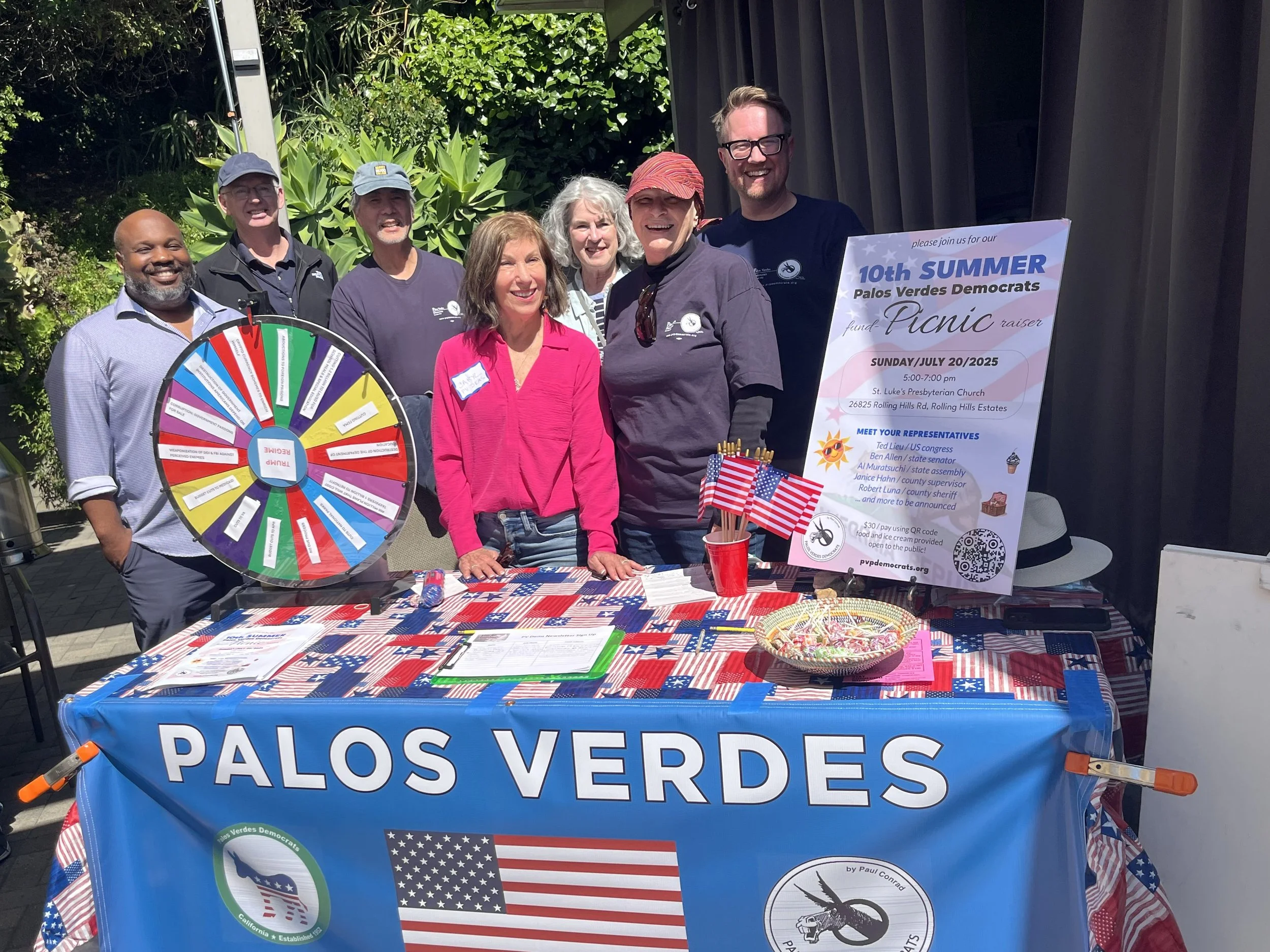
It's time to renew your membership for the 2025-26 club year! Your dues are essential in supporting our initiatives to further the Democratic Party agenda. The strength of Palos Verdes Democrats is directly tied to the number of active paying members. Memberships run from July 1 through June 30 of the following year. Dues are $30 for individuals and $50 for families, with optional additional contributions greatly appreciated. To renew, please visit: https://www.pvpdemocrats.org/membership
2025 August Meeting Report
By Jeannie Hahn
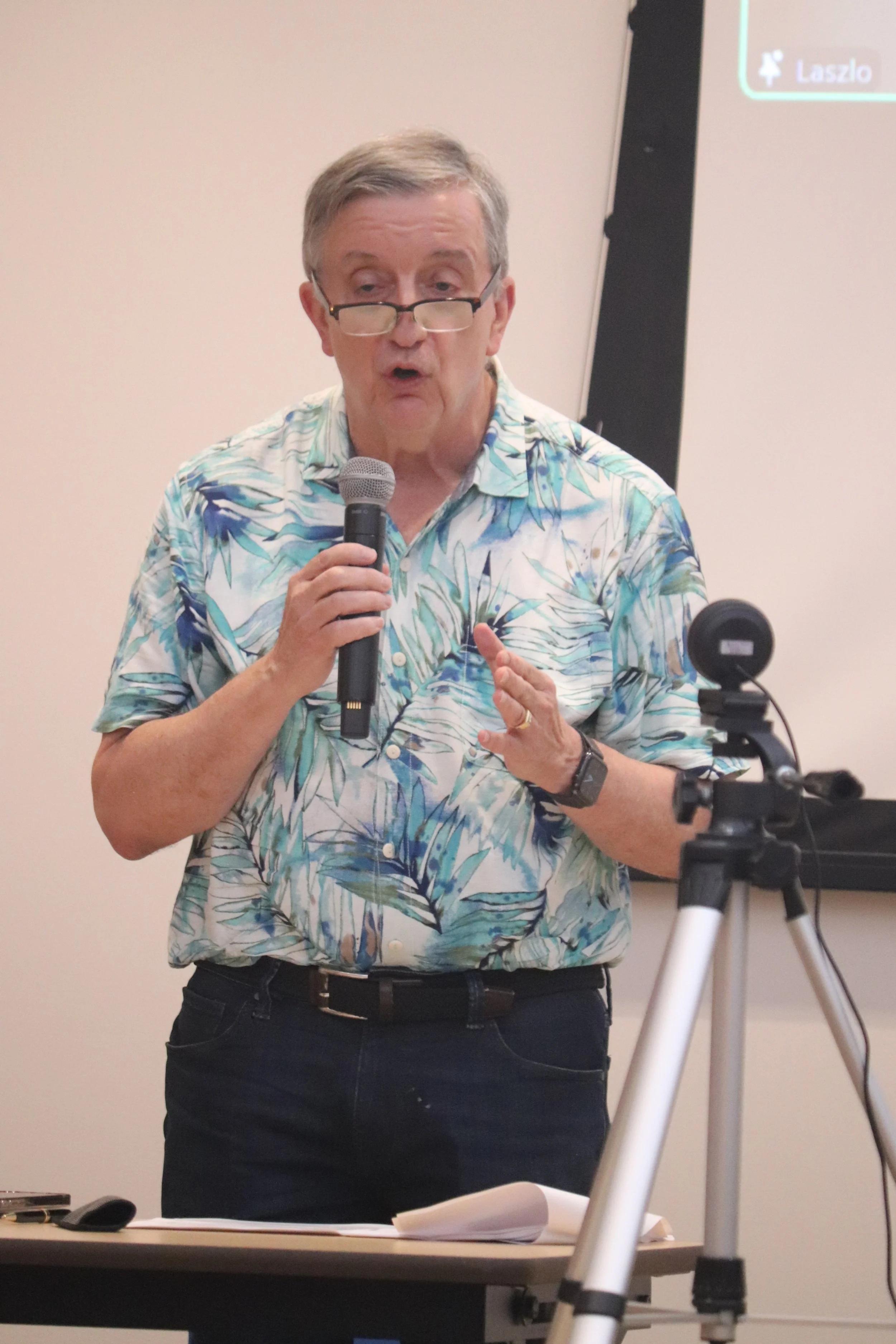
On Sunday, August 17, the Palos Verdes Democrats hosted one of the most anticipated events on our calendar - the Annual Supreme Court Term Review. Guiding this urgent and thought-provoking discussion was Judge Tom Long, a longtime PV Democrat, sitting Los Angeles Superior Court judge, and former two-term Mayor and City Councilmember of Rancho Palos Verdes, who returned once again to lead this informative session.
This year’s program carried historic weight as we examined the U.S. Supreme Court’s pivotal 2024–25 term, a term marked by far-reaching decisions, deepening ideological divisions, and an accelerating erosion of democratic norms. With Donald Trump in his second term, advancing the radical Project 2025 agenda to reshape America into an authoritarian kleptocracy and with a Supreme Court increasingly compliant under a Chief Justice who has strayed from the ideal of calling “balls and strikes”—our nation faces a dangerous and transformative moment in history.
The meeting centered on the influence of the Trump administration on Supreme Court rulings and the broader implications for the nation. Trump v. Casa challenged former President Trump’s executive order ending birthright citizenship, which would have limited citizenship to children of U.S. citizens or green card holders. While lower courts quickly struck down the order as unconstitutional and issued nationwide injunctions, the Supreme Court avoided ruling directly on citizenship. Instead, in a 6–3 decision, the Court eliminated the practice of federal courts issuing nationwide injunctions, meaning lower courts can now block unconstitutional actions only for the specific parties involved.
The majority, led by Justice Barrett, relied on narrow historical arguments, while concurring justices suggested further limits on class actions and funneling urgent cases to the Supreme Court. Dissenting justices warned that the decision weakens judicial oversight, risks unequal application of constitutional rights, and undermines the ability to check unconstitutional executive actions. Scholars criticized the ruling as diminishing judicial power at a time when robust oversight of the presidency is needed. Justice Jackson’s dissent, in contrast, emphasized the practical threats to the rule of law and was widely praised for its clarity and force.
The ruling represents a major shift in federal judicial power, curtailing one of the courts’ most effective tools for swiftly checking executive overreach. While the Court did not resolve the question of birthright citizenship, the decision raises concerns about unequal enforcement of constitutional rights and highlights the deep ideological polarization of the Court. For advocates of judicial independence, the case underscores the urgency of defending constitutional safeguards against unchecked executive action.
During the current term, the Supreme Court faced two major “emergencies”: Trump’s attempt to end birthright citizenship and lower courts blocking unconstitutional policies. Rather than restraining the executive, the Court effectively punished the district judges who issued nationwide injunctions, signaling a broader hostility toward judicial checks on executive power. Justice Ketanji Brown Jackson’s dissent described this as a “culture of disrespect” toward lower courts, highlighting deepening tensions between the Court’s majority and its lower-tier counterparts.
The Court’s approach carried over into Planned Parenthood v. Medina in South Carolina, where the state defunded Planned Parenthood from Medicaid for non-abortion services, such as STI treatment and cancer screenings. Although federal law’s “free choice of provider” clause explicitly allows patients to choose any qualified provider, the Court ruled that patients cannot enforce this right in court. This decision effectively strips Medicaid and Medicare recipients, and those under other federal spending programs of the ability to sue when states cut off services, weakening Congress’s power to create enforceable individual rights. The practical recourse now falls to Congress to draft laws that clearly guarantee the right to sue, though political obstacles like the filibuster and narrow majorities make such efforts extremely challenging.
Other cases this term reinforced the Court’s ideological pattern. Through heavy use of the shadow docket, the Court has often allowed Trump-era policies to proceed with minimal transparency. It consistently sides with conservative positions in culture-war disputes, such as prioritizing religious claims over LGBTQ rights, and frequently relies on what critics' call “empty formalism,” using distorted legal reasoning or historical traditions rather than engaging with the substantive issues. In U.S. v. Scrimity (Tennessee), the Court upheld a law banning puberty blockers and hormones for transgender minors while still allowing the same treatments for non-transgender children. By reframing the law as targeting “age/diagnosis” rather than sex, the Court narrowed protections under equal protection principles. While the ruling was limited in scope, the Court has already agreed to hear new cases next term that could further erode transgender rights and weaken Title IX protections, signaling a continued shift toward conservative interpretations of constitutional and statutory law.
A member asked whether the Supreme Court’s new limits on nationwide injunctions might prevent anti-abortion or anti-birth-control judges from issuing broad rulings. Judge Long explained that while the decision could reduce some forum shopping, it ultimately went too far by weakening the authority of federal courts across the board. As a result, courts can no longer stop unconstitutional actions beyond the immediate parties in a case, leaving major constitutional issues potentially unresolved for the wider public.
The speaker suggested a better approach would be to have controversial constitutional cases, such as those involving abortion or religious rights, heard initially by randomly assigned three-judge panels nationwide. This would reduce the incentive for litigants to seek sympathetic courts in specific jurisdictions, ensuring a more balanced and fair judicial review without undermining federal courts’ broader authority.
Justice Barrett criticized Justice Jackson’s dissent, but the speaker viewed Barrett’s response as dismissive rather than substantive. Overall, the Supreme Court appears reluctant to check former President Trump’s expansive executive actions, frequently siding against lower courts that try to block extreme policies. This raises concerns about the diminishing power of the judiciary to act as an effective check on unconstitutional executive conduct.
Key Cases and Trends (2025 Term)
This term, the Supreme Court has taken a conservative turn on issues ranging from executive power and birthright citizenship to pregnancy, gender identity, and LGBTQ education. In Trump v. Casa, the Court addressed former President Trump’s executive order attempting to end birthright citizenship. While lower courts quickly struck the order as unconstitutional, the Supreme Court avoided ruling directly on citizenship. Instead, in a 6–3 decision, it ended the longstanding practice of nationwide injunctions, limiting lower courts’ ability to block unconstitutional executive actions broadly. The majority, led by Justice Barrett, relied on narrow 18th-century historical reasoning, while concurring justices suggested further limits on class actions and the shadow docket. Dissents from Justices Sotomayor, Jackson, and Kagan warned that the ruling undermines judicial oversight, risks unequal application of constitutional rights, and weakens protections against executive overreach. Scholars have criticized the Court for weakening its role as a guardrail of democracy, with the Barrett-Jackson exchange drawing attention to ideological and personal divisions among the justices.
The Court has also curtailed federal enforcement of rights in other areas. In Planned Parenthood v. Medina, South Carolina defunded Planned Parenthood for Medicaid services unrelated to abortion, such as STI treatment and cancer screenings. Although federal law allows patients to choose any qualified provider, the Court ruled that individuals cannot enforce this right, effectively stripping patients of legal recourse under federal spending programs. Similarly, in U.S. v. Scrimity, the Court upheld Tennessee’s ban on puberty blockers and hormones for transgender minors by reframing the law as regulating age and diagnosis rather than sex. While the ruling was limited, it signals a broader trend toward narrowing protections for transgender individuals and potentially weakening Title IX safeguards. These decisions, alongside Trump v. Casa, reflect the Court’s frequent use of the shadow docket to allow politically charged policies with minimal transparency.
In cases involving pregnancy and gender identity, the Court has continued its conservative trajectory. It held that excluding pregnancy does not constitute sex discrimination, creating distinct legal categories for pregnant and non-pregnant individuals. Roberts applied similar reasoning to transgender health care, indicating that discrimination claims may not always warrant heightened Equal Protection review. Justices Thomas, Alito, and Barrett favor rational basis review, further limiting judicial protection for transgender rights. Meanwhile, in Mimmude v. Taylor, the Court sided with parents challenging LGBTQ-inclusive books in K–5 classrooms, holding that exposure to such content could constitute indoctrination and substantially burden religious exercise. This decision expands parental free exercise rights, constraining school curricula and potentially affecting a wide range of subjects where religious objections are raised.
Overall, this term’s rulings highlight a Court willing to limit lower court powers, expand parental and state discretion, and narrow protections for marginalized groups, particularly in the context of gender, LGBTQ rights, and reproductive health. Conservative justices often rely on historical formalism or rational basis review; while dissenting justices warn of the practical risks to equal protection and democratic oversight. The combination of these trends underscores the Court’s ideological polarization, the strategic use of procedural rulings like the shadow docket, and the broader cultural implications of its decisions for judicial independence and constitutional safeguards.
The meeting provided a much need update and understanding about the rulings of the Supreme Court in the light of the Trump administration.
From the Activism Chair
By Caryl Schwartz

I am proud of the state legislature and Governor Newsom for passing the Election Rigging Response Act. In the November 4th Special Election, we will be asked to vote on Proposition 50. I encourage you to vote YES. Passing this ballot measure is our opportunity to counter President Trump’s overreach in pressuring the Texas legislature to further gerrymander districts to hand him five additional GOP seats.
Trump has made it clear that he is trying to rig the 2026 elections to secure control of the U.S. House of Representatives. Proposition 50 gives Californians the chance to fight back against a wannabe dictator.
Elections matter. The only way to slow down an increasingly fascist regime is by restoring checks and balances in our government, starting with electing a Democratic majority in the House of Representatives. We are already seeing signs of resistance. The GOP supermajority in the Iowa State Senate was broken by Democrat Catelin Drey, who flipped a district that Trump won by 11.5 points. Drey went on to beat her GOP opponent by 11 points.
We are at a dangerous juncture where an American President is using armed military units from red-state governors to threaten and seize blue cities run by the opposition party. At the same time, he is weaponizing federal law enforcement, the DOJ, and the FBI to target political opponents. We cannot normalize or accept this behavior.
Trump openly muses in Cabinet meetings, cheered on by his sycophants, that Americans “want a dictator.” The cruelty of this administration is overwhelming, illustrated by masked ICE agents kidnapping residents off the streets.
Cruelty is the point. Trump’s brand of populism is also sadistic, deliberately adding to the pain felt across the nation—including by his own supporters. “Sadopopulism” is the term coined by fascism scholar Professor Timothy Snyder to describe this phenomenon. For a deeper understanding, I encourage you to read this article:
👉 https://open.substack.com/pub/thinkbigpicture/p/trump-sadopopulism-ice-maga?r=ckzcu&utm_medium=ios
In other troubling news, Dr. Demetre Daskalakis, the CDC’s Director of the National Center for Immunization and Respiratory Diseases, resigned on August 28. His resignation letter was a bleak assessment of Secretary of Health Kennedy’s leadership at HHS. Dr. Daskalakis wrote:
“I am unable to serve in an environment that treats CDC as a tool to generate policies and materials that do not reflect scientific reality and are designed to hurt rather than improve the public’s health… I have never experienced such radical non-transparency, nor have I seen such unskilled manipulation of data to achieve a political end rather than the good of the American people… HHS must reverse its dangerous course to dismantle public health as a practice and as an institution.”
Trump claims that crime is out of control as an excuse to impose authoritarian tactics in Democratic-led cities, particularly those with Black mayors. Data shows the opposite. Meanwhile, his regime has cut funding for public safety grants aimed at gun violence prevention. The true crisis is mass shootings: nearly 300 have occurred so far this year, including the tragedy at Annunciation Catholic School, the 44th school shooting of 2025. Republicans continue to offer only “thoughts and prayers” while opposing all sensible gun safety legislation.
For additional Activism options and opportunities, please don’t hesitate to reach out to me @pvcaryl@verizon.net or 310-897-0219.
Thank-you,
Caryl Schwartz
Activism Chair
Call to Action
Take Action to Protect Democracy
By Caryl Schwartz
Assisting Immigrants
Kathy Christie, a PV Dems member, is spearheading care packages for day workers in partnership with HILL Network. Please bring donations to our next meeting on September 21.
Needed items:
Clothing: new or gently used men’s jeans, long-sleeved t-shirts, sweaters, and backpacks
Food: individually packed items such as nuts, granola bars, beef jerky
Drinks: cases of bottled water, electrolyte powders (e.g., Propel)
$25 gift cards to grocery stores, Dollar Tree, etc...
You can also Venmo donations to @iphisnt https://account.venmo.com/u/iphisnt) to help South Bay Street vendors who are afraid to work to help expenses. This is a campaign by South Bay for All (https://linktr.ee/southbayforall).
In Person Events
Manhattan Beach Protests every Sunday 10:30am -Noon
https://www.mobilize.us/caindivisiblestanislaus/event/814761/
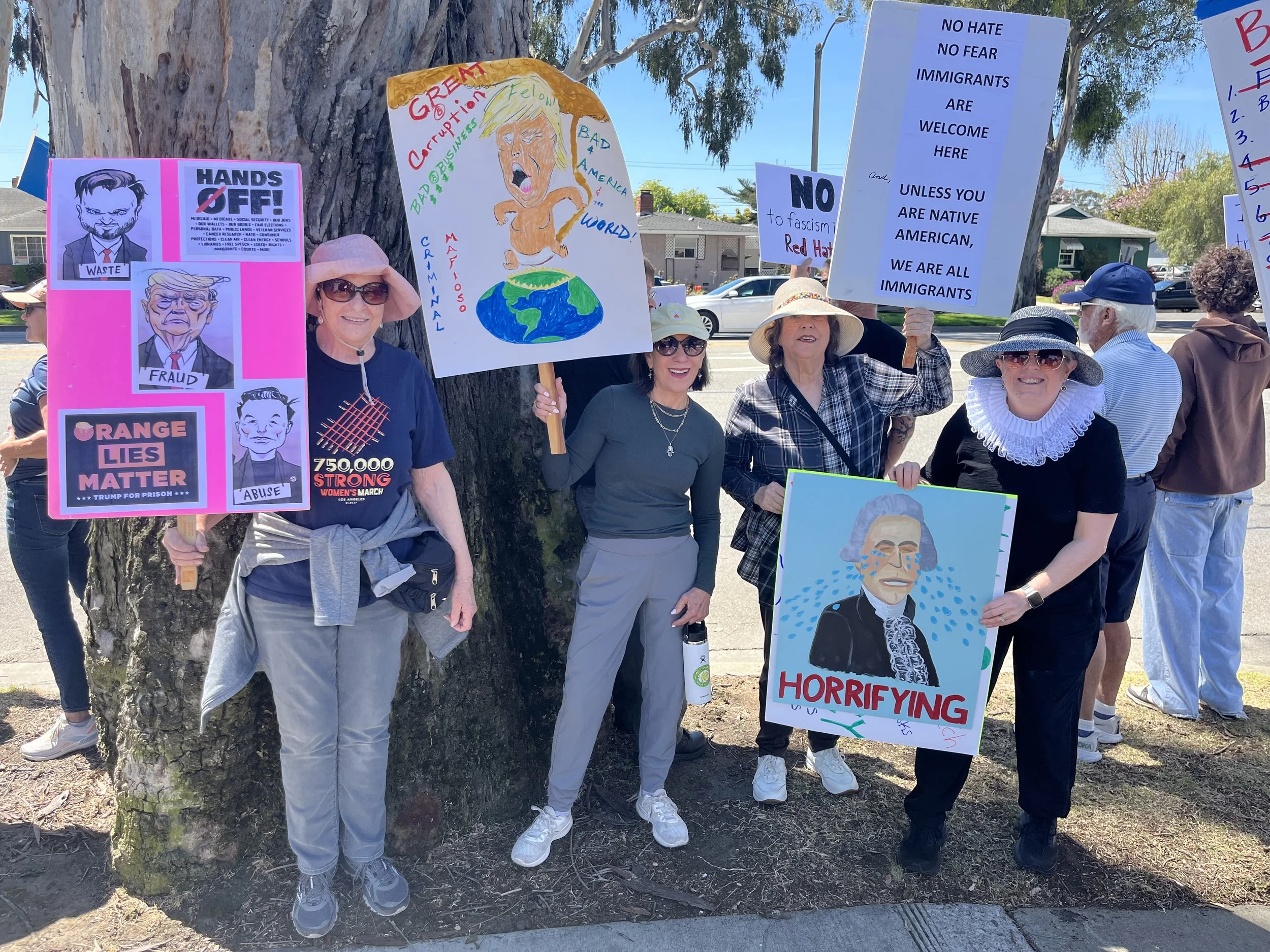
California Strong on September 27th 10:00 am to Noon. Democratic Clubs and Pro – Democracy group unite for 80-mile line along PCH. Invite friends and family to join us and bring your best signage.
The full route (RPV to LAX) is now advertised on Mobilize. Please sign-up on the link below:
California Strong: Hold the Line in South Bay LA · Indivisible/Swing Left South Bay LA
After signing up on Mobilize, book your spot on the line for the location to stand onsignup.com (https://signup.com/go/vwSGWjU). Instructions are on the Mobilize.
Happy Hour Fundraiser with David Min
Saturday, Sept. 6 @ 4 – 6 PM Volunteer. Click below for more information. https://secure.actblue.com/donate/gdhq-davemin2025
Volunteer: Proposition 50
Many ways to volunteer to help pass Proposition 50. Please click on the links below to sign-up.
Phone Banks
https://stopelectionrigging.com/
Prop 50 Vote YES Phone Bank – Protect California’s Voice!
https://www.mobilize.us/cadems/event/833990/
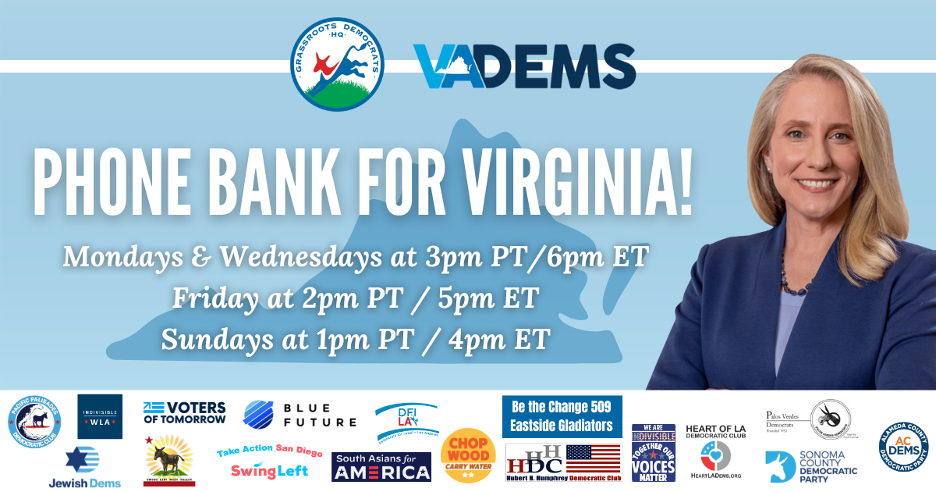
https://swingleft.org/event/register/mobilize:774353?s=u
For additional Activism options and opportunities, please don’t hesitate to reach out to me @pvcaryl@verizon.net or 310-897-0219.
Thank-you,
Caryl Schwartz
Activism Chair
California Strong: Hold the Line in South Bay LA
By Caryl Schwartz
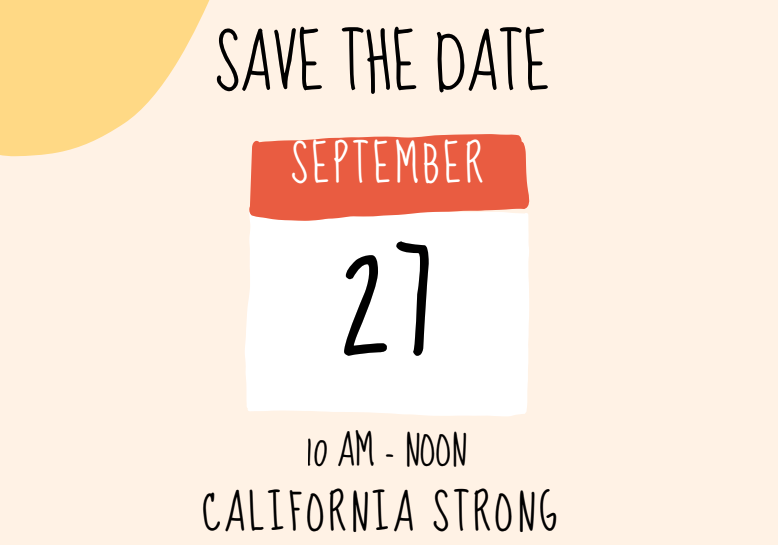
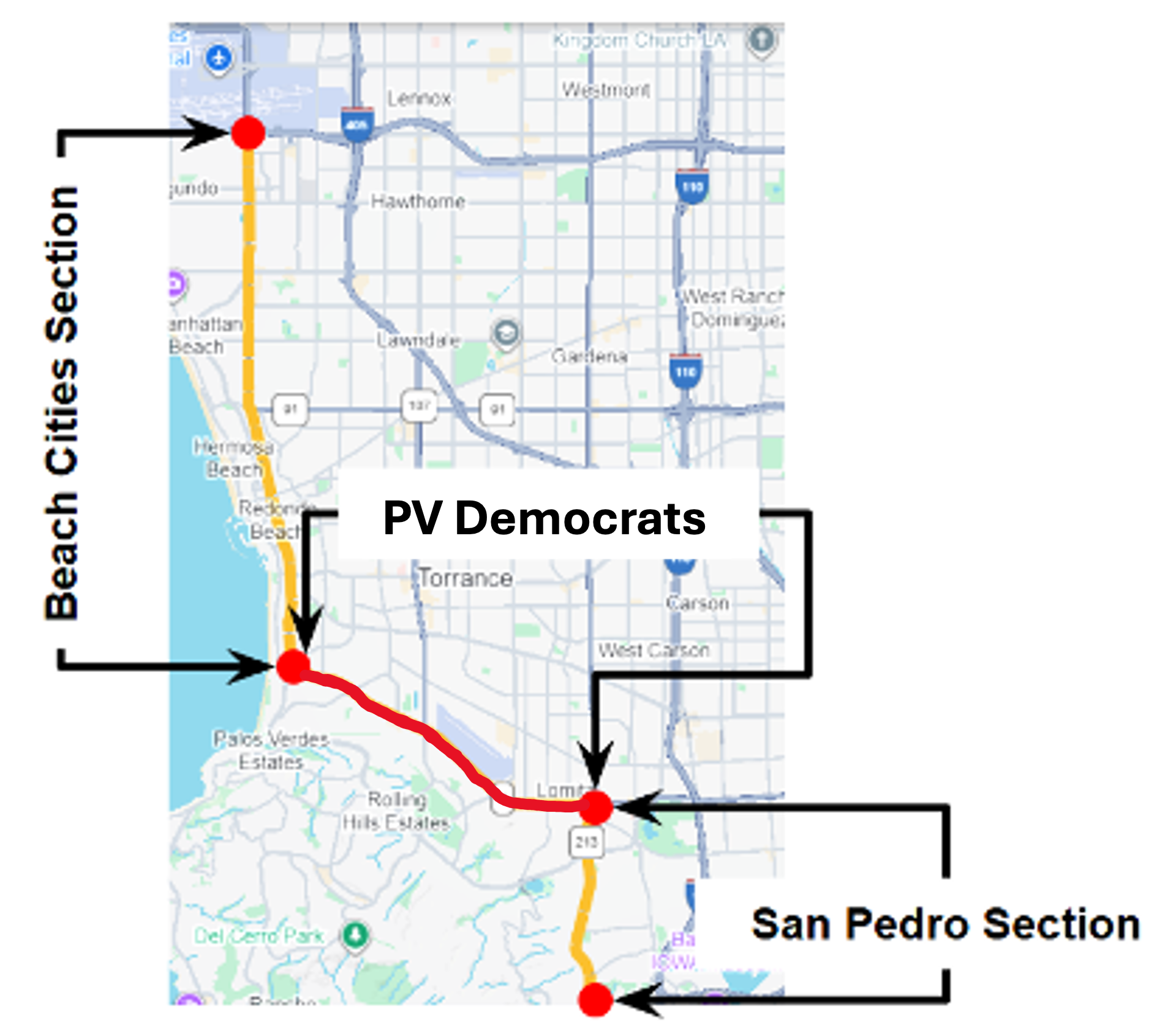
The Palos Verdes Democrats is joining with other Democratic clubs and pro-democracy groups for an 80-mile protest along the Southern California coast, spanning orange county to LAX and resuming northward.
The Palos Verdes Democrats’ section will cover Pacific Coast Highway from Western Ave to Palos Verdes Blvd.
Bring friends, family, and signs!
The 65th Annual Franklin and Eleanor Roosevelt Awards
By Jeannie Hahn

Caryl Schwartz: Female Democrat of the Year for District 66
At this annual event, the Los Angeles County Democratic Party celebrates grassroots leaders from each Assembly District as Democrats of the Year—dedicated activists who are always at the forefront of the fight against today’s divisive politics. (Please see next month’s newsletter for more details about Caryl Schwartz’s activism)
Sheraton Universal Hotel
333 Universal Hollywood Drive
Universal City, CA 91608
Sunday, October 19th, 2025
For more information about tickets:
https://secure.actblue.com/donate/rooseveltawards2025
Please Note: Early Bird tickets were available only until Friday, September 5, but may still be available if you book now!
PV Dems Appointed to CADEM Committees
By Tim Dixon & Jeannie Hahn

Several members of the Palos Verdes Democrats have been appointed to Standing Committees of the California Democratic Party (CADEM), where they will serve two-year terms.
Michael Lee-Chang to the Organizing Committee
Past President Tony Hale as Vice Chair of the Resolutions Committee
Paul Seo to the Credentials Committee
President Tim Dixon as Vice Chair of the Finance Commitee
CADEM assigned Tony Hale and Tim Dixon as Vice Chairs, which confers CADEM Executive Board status
Good-luck and thank you for your dedication to the Democratic Party.
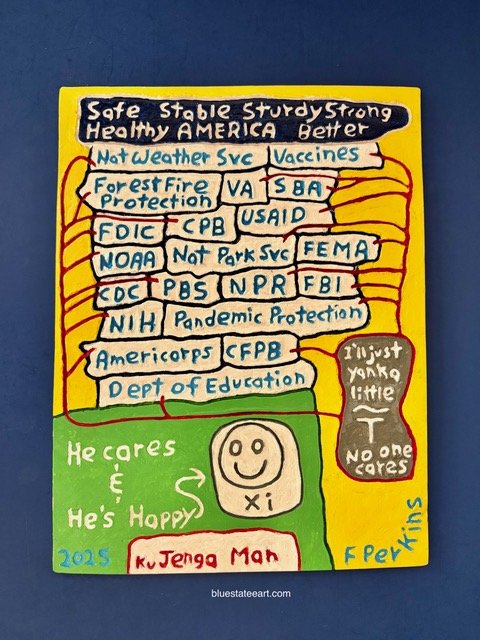
Color Me a Democrat
By Fraser Perkins
Meet the Board
By Jeannie Hahn